
Take into consideration telling someone that www.mysite.com/weblog/myarticle and www.mysite.com/myarticle are actually the similar internet web page. To you, they’re the similar, nevertheless to Google, even a small distinction throughout the URL makes them separate pages. That’s the place the canonical tag steps in. On this info, we’re going to stroll you via what a canonical URL is, how URL canonicalization works, when to utilize it, and which errors to avoid so that search engines like google and yahoo like google always understand your most popular internet web page mannequin.
What’s a canonical URL?
A canonical URL is the first, most popular, or official mannequin of a webpage that you simply really need search engines like google and yahoo like google like Google to crawl and index. It helps search engines like google and yahoo like google determine which mannequin of an online web page to cope with as the primary one when quite a few URLs lead to comparable or duplicate content. Consequently, it avoids duplicate content material materials and protects your SEO ranking signals.
All the next URLs can current the similar internet web page, nevertheless that you must set only one as a result of the canonical URL:
https://www.mysite.com/product/sneakershttps://mysite.com/product/sneakers?ref=instagramhttps://m.mysite.com/product/sneakershttps://www.mysite.com/product/sneakers?coloration=black
What’s a canonical tag?
A canonical tag (moreover referred to as a rel="canonical" tag) is a small HTML snippet positioned contained within the a part of a webpage to tell search engines like google and yahoo like google which URL is the canonical or grasp mannequin. It acts like a clear label saying, “Index this internet web page, not the others.” This prevents duplicate content material materials factors, consolidates ranking alerts, and helps right canonicalization all through your site.
Proper right here’s an occasion of a canonical tag in movement:
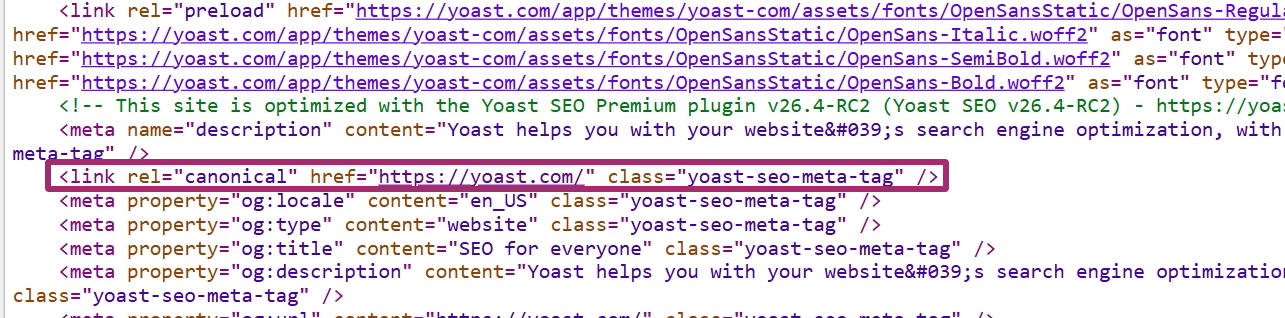
This tag must be positioned on any alternate or duplicate variations that point once more to the first internet web page you want listed.
How does URL canonicalization work?
Canonicalization is the tactic of selecting the marketing consultant or canonical URL of a piece of content material materials. From a bunch of equal or nearly equal URLs, that’s the mannequin that search engines like google and yahoo like google cope with as the first internet web page for indexing and ranking.
Whenever you understand that, canonicalization turns into rather a lot easier to visualise. Take into account it as a three-step workflow.
How the canonicalization course of works
Proper right here’s how the canonicalization works:
Serps detect duplicate or comparable URLs
Google groups URLs that return the similar (or almost the similar) content material materials. These might come from:
- URL parameters
- HTTP vs. HTTPS variations
- Desktop vs. mobile URLs
- Filtered or sorted pages
- Regional variations
- Unintentional duplicates like staging URLs
You signal which URL is canonical
You might info search engines like google and yahoo like google using canonical alerts like:
- The
rel="canonical"tag - 301 redirects
- Internal hyperlinks pointing to a minimum of one most popular mannequin
- Fixed hreflang utilization
- XML sitemaps itemizing the favored URL
- HTTPS over HTTP
The strongest and clearest hint is the canonical tag positioned throughout the head of the net web page.
Google selects one canonical URL
Google makes use of your alerts, along with its private evaluation, to seek out out the primary URL. Whereas Google often follows canonical tags, it’d override them if it detects stronger alerts equal to redirects, inside linking patterns, or shopper behaviour.
As quickly as Google settles on the canonical URL, search engines like google and yahoo like google will:
- Consolidate hyperlink equity into the canonical internet web page
- Index the canonical URL
- Cope with all non-canonical URLs as duplicates
- Reduce crawl waste
- Steer clear of exhibiting comparable pages in search outcomes
Canonical tags are a contact, not a directive. Google ought to distribute hyperlink equity in any other case if it deems the canonical tag unreliable.
The reason why canonicalization happens
Canonicalization turns into important when completely completely different URLs end result within the similar content material materials. Some widespread causes are:
Space variants
As an example, you’ve got one product internet web page for the USA and one for the UK, like: https://occasion.com/product/shoes-us and https://occasion.com/product/shoes-uk.
If the content material materials is form of equal, use one canonical hyperlink or a clear regional setup to avoid confusion.
Skilled tip: For regional variants, combine canonical tags with hreflang to specify language/space specializing in.
Machine variants
Everytime you serve separate URLs for mobile and desktop, equal to: https://m.occasion.com/product/sneakers and https://www.occasion.com/product/sneakers.
Canonical tags help search engines like google and yahoo like google understand which URL is the primary mannequin.
Protocol variants
Sorting and filtering often create many URLs that current comparable content material materials, like:
https://occasion.com/sneakers?kind=value or https://occasion.com/sneakers?coloration=black&dimension=7
A single canonical URL, equal to https://occasion.com/sneakers, tells search engines like google and yahoo like google which internet web page ought to hold the first ranking alerts.
Moreover be taught: Optimizing ecommerce product variations for SEO and conversions
Unintentional variants
Probably a staging or demo mannequin of the positioning is left crawlable, or every https://occasion.com/internet web page and https://occasion.com/internet web page/ return the similar content material materials
Canonical tags and proper URL canonicalization help avoid these unintentional duplicates.
Some duplicate content material materials on a site is common. The target of canonicalization in SEO is to not take away every duplicate, nevertheless to level out search engines like google and yahoo like google which URL you want them to cope with as the primary one.
In smart options
In apply, canonicalization comes down to a few key points:
Placement
The canonical tag is positioned throughout the head of the HTML, for example:
hyperlink rel="canonical" href="https://www.occasion.com/preferred-page" /
Each internet web page must have at most one canonical tag, and it must degree to the clear, most popular canonical URL.
Identification
Serps research quite a few alerts to seek out out the canonical mannequin of an online web page. The rel="canonical" tag is important, nevertheless moreover they consider 301 redirects, internal links, sitemaps, hreflang, and whether or not or not the net web page is served on HTTPS. When these alerts are fixed, it’s easier for Google to pick out the becoming canonicalized URL.
Crawling and indexing
As quickly as search engines like google and yahoo like google understand which URL is canonical, they primarily crawl and index that mannequin, folding duplicates into it. Hyperlink equity and completely different alerts are consolidated to the canonical internet web page, which improves stability in rankings and makes your canonical tag search engine optimisation setup extra sensible.
The precept rule for canonicalization is easy: if quite a few URLs present the similar content material materials, choose one, make it your canonical URL, and clearly signal that various with an accurate canonical tag.
Google’s John Mueller locations it merely: ‘I prefer to advocate doing this sort of self-referential rel=canonical on account of it really makes it clear for us which internet web page that you must have listed or what this URL must be when it’s listed.’
And that’s exactly why canonical tags matter; they inform search engines like google and yahoo like google which mannequin of an online web page is the precise one. This retains your search engine optimisation alerts clear and prevents your site from competing with itself.
They’re obligatory on account of they:
- Steer clear of duplicate content material materials factors: Canonical tags inform Google which URL must be listed, stopping comparable or duplicate pages from difficult crawlers or diluting rankings
- Consolidate hyperlink equity: Canonicalization works equally to inside linking; every are methods used to direct authority to the net web page that points most. As an alternative of splitting ranking alerts all through duplicate URLs, all information is consolidated proper right into a single canonical URL
- Improve crawl effectivity: Serps don’t waste time crawling pointless duplicate pages, which helps them uncover your obligatory content material materials sooner
- Enhance shopper experience: Prospects land on the proper, up-to-date mannequin of your internet web page, not a filtered, parameterized, or unintended duplicate
Canonical tags are useful in quite a few regularly search engine optimisation conditions. Listed below are the most common conditions the place you’ll want to make use of a rel=canonical tag to signal your most popular URL.
URL variations
In case your internet web page tons of beneath quite a few URL codecs, with or with out “www,” HTTP vs. HTTPS, and with or and never utilizing a trailing slash, search engines like google and yahoo like google might index each mannequin individually. A canonical tag helps you standardize the favored mannequin so Google doesn’t cope with them as separate pages.
Duplicate content material materials
Ecommerce web sites, blogs with tag archives, and category-driven pages often generate duplicate or near-duplicate content material materials by design. If the similar product or article appears beneath quite a few URLs (filters, parameters, monitoring codes, and so forth.), canonical tags help Google understand which canonical URL is the authoritative one. This prevents cannibalization and protects your canonical search engine optimisation setup.
Moreover be taught: Ecommerce SEO: how to rank higher & sell more online
Syndicated content material materials
In case your content material materials is republished on confederate web sites or aggregators, always use a canonical tag that components once more to your distinctive mannequin. This ensures your internet web page retains the ranking alerts, not the syndicated copy, and search engines like google and yahoo like google know exactly the place the content material materials was initially revealed.
If syndication companions don’t honor your canonical tag, consider using noindex or negotiating hyperlink attribution.
Paginated pages
Prolonged lists or multi-page articles often create a sequence of URLs like /internet web page/2/, /internet web page/3/, and so forth. These pages contribute to the similar matter nevertheless shouldn’t be listed individually. Together with canonical tags to the paginated sequence (often pointing to internet web page 1 or a “view-all” mannequin) helps consolidate indexing and retains rankings focused on the primary internet web page.
Skilled tip: For paginated content material materials, use self-referencing canonicals (each internet web page components to itself) till you’ve got a ‘view-all’ internet web page that tons of quickly and is crawlable.
Moreover be taught: Pagination & SEO: best practices
Web page migrations
Everytime you change domains, restructure URLs, or move from HTTP to HTTPS, using fixed canonical tags helps reinforce which pages change the earlier ones. It alerts to search engines like google and yahoo like google which canonicalized URL must inherit ranking power. All through migrations, canonical tags act as a safety web to forestall duplicate variations from competing with each other.
URL canonicalization is all about giving search engines like google and yahoo like google a clear signal about which mannequin of an online web page is the favored or canonical URL. You might implement it in quite a few straightforward steps.
Using the rel=”canonical” tag
The commonest method (as confirmed quite a few situations on this weblog publish) to set a canonical URL is by together with a rel="canonical" tag throughout the head a part of your internet web page. It appears to be like this:
hyperlink rel="canonical" href="https://www.occasion.com/preferred-url"/
This tag tells search engines like google and yahoo like google which URL ought to hold all ranking alerts and appear in search outcomes. Ensure that every duplicate or alternate mannequin hyperlinks to the similar most popular URL, and that the canonical tag is fixed all via the positioning.
It’s additionally attainable to make use of rel="canonical" in HTTP headers for non-HTML content material materials equal to PDFs. That’s helpful when you can’t place a tag throughout the internet web page itself.
Skilled tip: Whereas supported for PDFs, Google couldn’t always honor canonical HTTP headers. Use them along with completely different alerts (e.g., sitemaps).
Moreover, make sure that the canonical tag is as close to the very best of the top half as doable so that search engines like google and yahoo like google can see it early. Each internet web page must have only one canonical tag, and it must always degree to a transparent, accessible URL. Steer clear of mixing alerts. The canonical URL, your inside hyperlinks, and your sitemap entries must all match.
Setting a most popular space in Google Search Console
Google allows you to choose whether or not or not you want your URLs to look with or with out www. Setting this want helps reinforce your canonical alerts and prevents search engines like google and yahoo like google from treating www and non-www variations as completely completely different URLs.
To set your most popular space, open your property in Google Search Console, go to Settings, and choose the mannequin that you must cope with as your important space.
Redirects (301 redirects)
A 301 redirect is among the many strongest alerts you might ship. It utterly informs browsers and search engines like google and yahoo like google that one URL has been redirected to a distinct and that the model new URL must be thought-about the canonical URL.
Use 301 redirects when:
- You merge duplicate URLs
- You modify your site building
- You migrate to HTTPS
- It’s good to consolidate hyperlink equity from outdated pages
In spite of everything, redirects change the earlier URL, whereas canonical tags advocate a want with out eradicating the duplicate.
With Yoast search engine optimisation Premium, you might deal with redirects effortlessly correct inside your WordPress dashboard. The built-in redirect manager feature of the search engine optimisation plugin helps you avoid pointless 404s and prevents friends from landing on ineffective ends, conserving your site building clear and your shopper experience straightforward.
A wiser analysis in Yoast search engine optimisation Premium
Yoast search engine optimisation Premium has a smart content material materials analysis that helps you take your content material materials to the following stage!
Additional canonicalization methods
There are a selection of additional strategies to help your canonical setup.
- XML sitemaps: Always embrace solely canonical URLs in your sitemap. This helps search engines like google and yahoo like google understand which URLs you want listed
- Hreflang annotations: For multi-language or multi-region web sites, hreflang tags help search engines like google and yahoo like google serve the proper regional mannequin whereas nonetheless respecting your canonical want
- Hyperlink HTTP headers: For recordsdata like PDFs or completely different non-HTML content material materials, using a
rel="canonical"HTTP header helps you specify the favored URL server-side
Each of these methods reinforces your canonical alerts. Everytime you use them collectively, search engines like google and yahoo like google have a rather a lot clearer understanding of your canonicalized URLs.
Implementing canonicalization in WordPress with Yoast
Manually together with a rel="canonical" tag to the top of every duplicate internet web page might be fiddly and error inclined. It’s good to edit templates or theme recordsdata, preserve tags fixed collectively along with your sitemap and inside linking, and remember explicit circumstances, equal to PDFs or paginated assortment. Modifying site code and HTML is harmful when you’ve got fairly a couple of pages or quite a few editors engaged on the positioning.
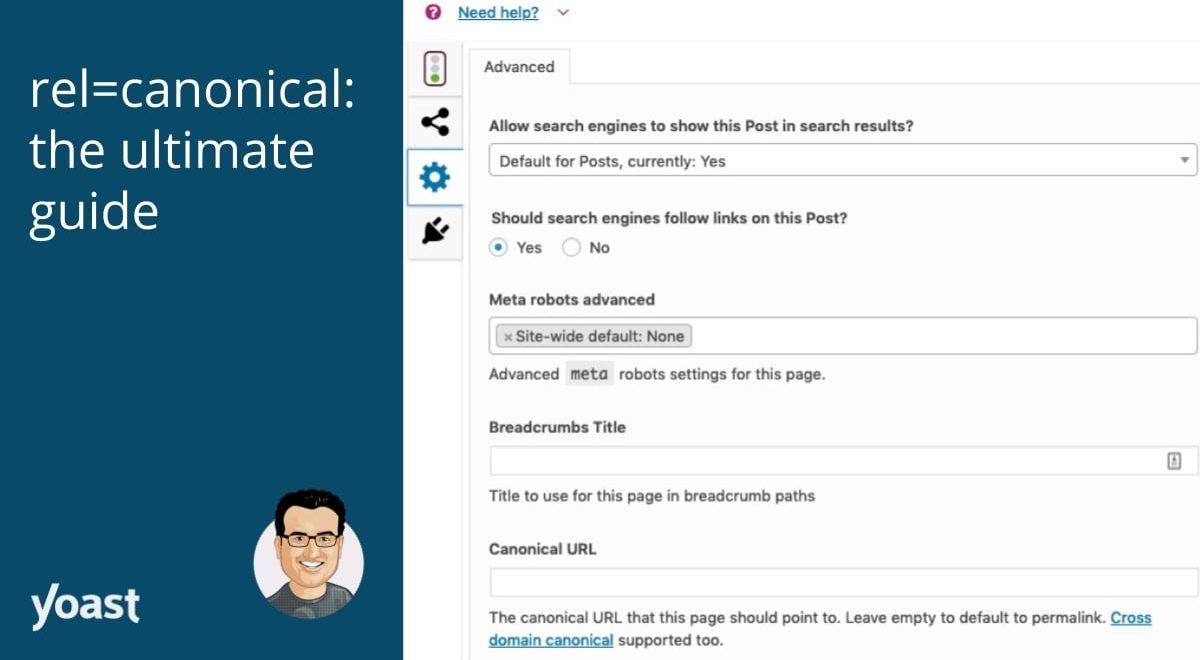
Yoast search engine optimisation makes this easier and safer. The plugin routinely generates good canonical URL tags for your entire pages and templates, eliminating the need for handbook theme file edits or code additions. You might nonetheless override that various on a page-by-page basis throughout the Yoast search engine optimisation sidebar: open the publish or internet web page, go to Superior, and paste the entire canonical URL throughout the Canonical URL topic, then save.
- Automated safety: Yoast routinely offers canonical tags to pages and archives by default, which helps cease many widespread duplicate content material materials factors
- Information override: For explicit circumstances, use the Yoast sidebar > Superior > Canonical URL topic to set a custom-made canonical. This accepts full URLs and updates when you save the publish
- Edge circumstances handled: Yoast gained’t output a canonical tag on pages set to noindex, and it follows biggest practices for paginated assortment and archives
- Developer selections: Whenever you need custom-made habits, you might filter the canonical output programmatically using the wpseo_canonical filter or use Yoast’s developer API
- Cross-domain and non-HTML: Yoast helps cross-site canonicals, and you need to make the most of rel=”canonical” in HTTP headers for non-HTML recordsdata when needed
Every Yoast SEO and Yoast SEO Premium embrace canonical URL coping with, and the Premium mannequin offers additional automation and controls to streamline larger web sites.
Ought to be taught: How to change the canonical URL in Yoast SEO for WordPress
rel=“canonical”: one URL to rule all of them
Canonical URLs might appear to be a small technical factor, nevertheless they play an unlimited place in serving to search engines like google and yahoo like google understand your site. When Google finds quite a few URLs displaying the similar content material materials, it ought to select one mannequin to index. In the event you don’t info that various, Google will make the selection by itself, and that various is not going to be always the mannequin you meant. That will lead to reduce up ranking alerts, wasted crawl train, and worsening drops in visibility.
Using canonical URLs offers you once more that administration. It tells search engines like google and yahoo like google which internet web page is the primary mannequin, which ones are duplicates, and the place all authority alerts must be directed. From filtering URLs to regional variants to unintended duplicates that slip by the cracks, canonicals preserve all of the issues tidy and predictable.
The good news is that canonicalization doesn’t ought to be tough. A straightforward rel=”canonical” tag, fixed URL coping with, smart redirects, and clear sitemap alerts are enough to forestall most factors. And for those who’re working in WordPress, Yoast search engine optimisation takes care of nearly all of this routinely, so you might give consideration to creating content material materials in its place of wrestling with code.
On the end of the day, canonical URLs are about readability. Current search engines like google and yahoo like google the mannequin that points, take away the noise, and preserve your authority consolidated in a single place. When your alerts are clear, your rankings have a secure foundation to develop.






1 Comment